
How to Reduce Fruit Flies in Your Kitchen
Share
A few fruit flies near the fruit bowl can quickly become a daily annoyance. The most useful starting point is finding what is attracting them: overripe produce, exposed food scraps, sticky spills, or residue in recycling.
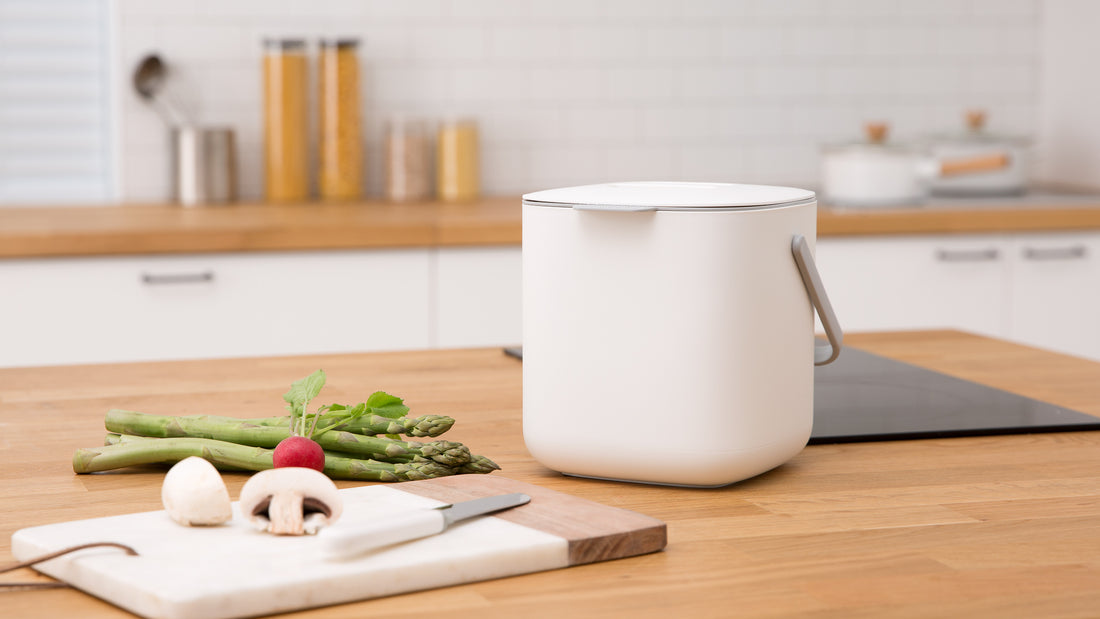
A covered food waste bin helps contain scraps between trips outside. Pair it with a few simple cleaning habits to make your kitchen less inviting to fruit flies.
Start With the Source
Check your fruit bowl, stored potatoes and onions, rubbish, and recycling. Remove spoiled produce and clean any residue underneath it.
Fruit flies breed around fermenting food and liquids. Removing those sources matters more than catching the adult flies you can see.
The University of Maryland Extension recommends eliminating the food and breeding sites where larvae develop.
Keep Food Scraps Covered
Collect peelings, cores, and other scraps in a bin with a snug-fitting lid. Close it after adding food, and wipe away anything caught around the rim.
Choose a size that suits how much food you prepare and how often you empty it. A larger bin offers more room, but it should not become a reason to leave scraps sitting longer.
Explore Blue Ginkgo kitchen compost bins to compare capacities and designs.
Recognized by Serious Eats for Keeping Pests Away
In its countertop compost bin review, Serious Eats selected the Blue Ginkgo 2.6L Kitchen Compost Bin as its pick for keeping pests away. The reviewer reported that its tight-fitting lid kept fruit flies out throughout a 14-day test.
The review also noted that food could collect in the inner basket’s holes, making careful cleaning important.
Read the Serious Eats compost bin review.
This recognition relates to the tested 2.6L model. A well-fitting lid helps protect the contents, but regular emptying and cleaning remain essential.
Empty and Clean the Bin Regularly
Empty food scraps frequently, especially during warm weather. You do not need to wait until the bin is full.
Wash the lid, inner basket, and outer container according to the product’s care instructions. Pay attention to the rim, corners, and drainage holes where residue can remain.
For Blue Ginkgo bins, keep the inner basket installed when closing the lid so it fits correctly.
Check Fruit and Recycling
Check ripening fruit daily. Remove damaged or spoiled pieces, and refrigerate ripe produce where appropriate.
Rinse food and drink residue from recyclable containers before setting them aside. Clean spills beneath bins and around the recycling area, too—an apparently empty bottle can still contain something attractive to flies.
Use Traps as a Supporting Step
A fruit fly trap can help catch adults already in the kitchen. It will not resolve the problem if food residue or spoiled produce remains nearby.
Use traps alongside removing breeding sources, cleaning surfaces, and keeping food scraps covered. If flies persist, check for overlooked produce or residue rather than simply adding more traps.
Build a Routine That Is Easy to Keep
After preparing food, transfer scraps to the bin, wipe the work surface, and close the lid. Empty and clean the bin regularly, and give fruit and recycling a quick check.
Thoughtful design makes these small tasks easier. Blue Ginkgo kitchen compost bins are designed and made in South Korea, with removable inner baskets and filter-free lids for everyday food-scrap collection.
Find the right Blue Ginkgo kitchen compost bin.
Better Design, Simpler Living.