
How to Organize Your Desk for Everyday Use
Share
A desk is easier to use when everyday tools have a place—and there’s still room to work. Start with what you reach for most, then choose storage around those items.
Whether you have a home office or a corner of the dining table, these simple desk organization ideas can help make setup, work, and cleanup easier.
1. Start With Your Daily Essentials
Clear your desk and separate the contents into three groups: things you use daily, things you use occasionally, and things that belong elsewhere.
Keep daily essentials within reach. Move spare stationery, duplicate cables, and occasional tools to nearby storage. Recycle or file papers you no longer need on the surface.
Before adding an organizer, check that it leaves enough room for your keyboard, notebook, and the work you actually do.
2. Give Small Supplies a Clear Place
Pens, scissors, sticky notes, and charging cables are easy to scatter across a desk. Group them by how you use them, with a separate compartment for items that tend to get lost.
A desktop organizer can keep frequently used supplies visible and accessible. Check the compartment dimensions against your largest items before choosing one.
Leave a little room in each section. You should be able to return a pair of scissors without rearranging everything around it.
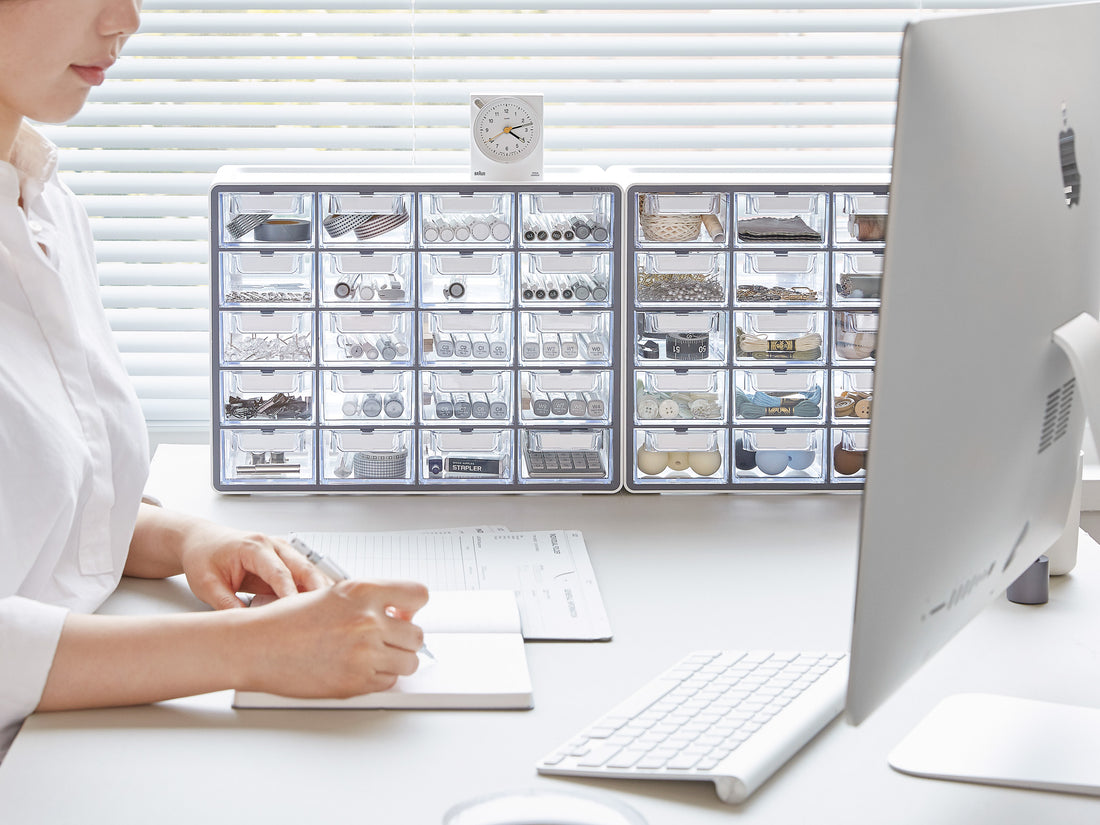
3. Use Drawers for Smaller, Less Frequent Items
Paper clips, spare erasers, craft materials, and other small supplies don’t all need to sit on your work surface.
Divided drawers help separate these items into manageable groups. Label them by contents or task so you can find supplies without opening every drawer.
Blue Ginkgo drawer cabinets are available in 12-drawer, 16-drawer, and 20-drawer configurations. Explore the cabinet options in our office storage collection and check individual drawer measurements before ordering.
Keep the supplies you use most in the easiest drawers to reach.
4. Make Shared Workspaces Portable
If your desk also serves as a dining table, homework station, or craft area, a portable kit can make changing activities easier.
Keep the essentials for one task in a storage caddy. Bring it to the table when needed, then return it to a shelf when finished.
Choose the caddy around both its contents and its storage space. Allow room above it for the handle and anything extending beyond the sides.
Our storage caddy buying guide compares the three shapes and explains what to measure.
5. Give Paper One Landing Place
Loose paper can spread quickly. Choose one tray or folder for incoming documents and review it regularly.
Keep active paperwork separate from documents you’re saving for reference. If a paper needs action, give it a clear next step rather than leaving it somewhere on the desk as a reminder.
The aim is to make unfinished work easy to find without letting it take over the surface.
6. Make the End-of-Day Reset Easy
Before finishing, return tools to their compartments, deal with loose paper, and clear space for the next task.
If cleanup feels awkward, adjust the arrangement. Move frequently used supplies closer, reduce what’s on display, or choose a larger compartment for items that keep getting stuck.
A useful desk setup should fit the way you work. Blue Ginkgo’s office and storage products are designed and made in South Korea, with practical details that help everyday essentials stay organized and accessible.
Explore Blue Ginkgo desk organizers and office storage
Better Design, Simpler Living.